
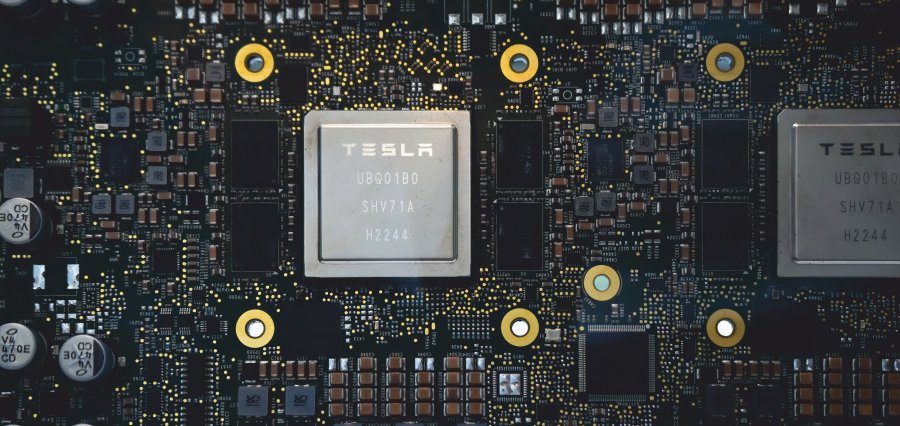
Prime Highlights
- Tesla and SpaceX plan to build advanced chip factories in Austin, Texas.
- The move aims to secure chip supply and support growing demand for AI, vehicles, and space technology.
Key Facts
- Elon Musk is pushing for in-house chip production to reduce dependence on external suppliers and support long-term growth.
- The “Terafab” project will include two facilities focused on chips for vehicles, robots, data centres, and space systems.
Background
Elon Musk has unveiled plans to build what he is calling the world’s largest chip manufacturing facility, to be located in Austin, Texas. Named Terafab, the project is a joint effort between Tesla, SpaceX, and xAI, Musk’s artificial intelligence company that SpaceX recently merged with. The announcement was made on Saturday night, at an event held inside the historic Seaholm Power Plant in downtown Austin, attended by Texas Governor Greg Abbott.
Terafab will technically consist of two separate fabs, each making only one chip design. One chip will be optimised for Tesla vehicles and Optimus humanoid robots, while the second will be designed for AI data centers operating in space.
Musk said he is pursuing this project because existing chip suppliers, including TSMC, Samsung, and Micron, are not expanding fast enough to meet the growing demand from his companies. He said that building the Terafab is necessary because without it, they would not have the chips they need.
The goal is to manufacture chips that can support 100 to 200 gigawatts of computing power per year on Earth, along with one terawatt in space. For context, the current total AI computing output globally stands at around 20 gigawatts per year, which Musk says is only about 2% of what his companies will eventually need.
The announcement has been met with considerable market scepticism. Analysts have pointed out that Musk has no background in semiconductor manufacturing, and that leading-edge chip fabrication at the 2-nanometer level, which Terafab is targeting, is among the most technically demanding industrial processes in the world. No construction timeline or production schedule has been shared. Tesla’s core electric vehicle business has also been under strain, with sales declining for the second year running in 2025.
The Terafab project demonstrates to the semiconductor and AI infrastructure industry that major technology companies have changed their approach because they will no longer rely on external chipmakers for their essential robotic and AI processing needs.