
Leadership today is defined as the ability to build lasting value, strengthen systems, and guide organizations with clarity and purpose. It is not just about titles or authority anymore; it shows how well leaders create stability and enable progress. True leaders are those who build strong foundations that continue to deliver value over time, even beyond their direct presence.
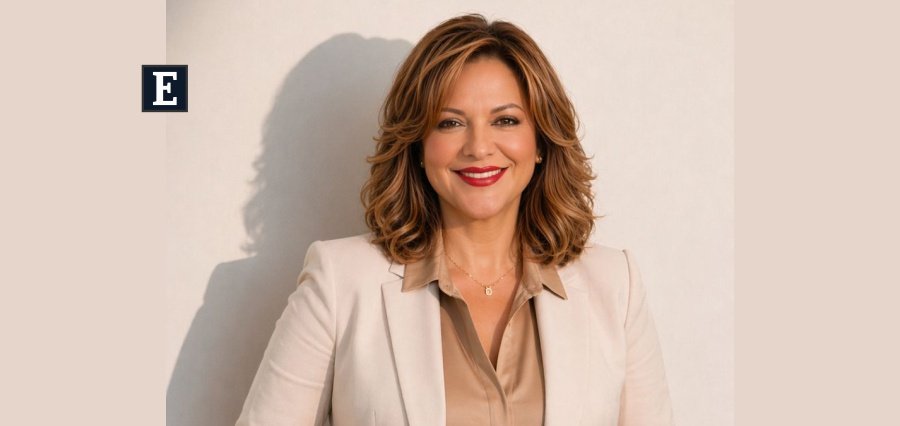
Samah Moustafa, Group Chief Financial Officer (CFO) at Go Behavioral LLC, represents this kind of leadership through her work in financial strategy and organizational growth. She approaches finance as a tool for building sustainability, not just tracking performance. With a focus on structure, accountability, and long-term strength, she continues to shape business operations that support both people and progress.
Impact Over Titles: A Different Definition of Leadership
In a world where leadership is often defined by titles, visibility, and authority, Samah has built her journey on something far more enduring. For her, leadership was never about reaching a title. It was about reaching a level of impact that speaks even in silence. Early in her journey, she realized that numbers alone don’t build organizations. People do. Systems do. Vision does. And more importantly, the courage to take responsibility for outcomes no one else is willing to own.
She didn’t step into leadership with a predefined blueprint. Instead, she built her path by questioning what leadership should really look like, not just in theory, but in practice. Over time, she discovered that the strongest leaders are not the ones who control everything, but the ones who create systems that continue to perform even when they are not present.
At the core of her leadership philosophy is one simple belief: “real leadership is measured by the lives you elevate, not the authority you hold.” This belief continues to shape the way she leads, the way she builds, and the way she measures success.
Beyond the CFO Role: Turning Finance Into a Growth Engine
As a Group CFO, Samah’s role naturally revolves around financial strategy, structure, and performance. But she has always seen finance as more than numbers. Finance, when done right, becomes the backbone of decision-making, the driver of sustainability, and the silent engine behind growth.
This perspective pushed her to go beyond traditional financial leadership. She didn’t want to just analyze results; she wanted to shape them. That shift in mindset led her into building and co-founding ventures that connect financial clarity with operational efficiency.
One of these ventures is Revenxa, a medical billing initiative designed to optimize revenue cycles and create transparency within healthcare systems. Through Revenxa, she moved from reviewing financial performance to actively engineering it, building processes, designing structures, and ensuring sustainability from the ground up.
In parallel, her involvement in therapy-focused organizations, including Lebensfreude Therapie, allowed her to connect financial leadership with something deeper, human impact. It reinforced her belief that behind every number, there is a person, a story, and a life being affected.
Success, Rewritten: From Growth to Sustainability
Success, at the beginning of Samah’s career, was simple: growth, expansion, visible achievements. It was about proving capability and delivering results. But over time, that definition changed.
Today, success means sustainability. It means building organizations that are not dependent on one person. It means creating systems that can scale, adapt, and continue to grow regardless of circumstances. It means empowering teams to operate independently while maintaining alignment with a shared vision.
For her, success is also about empowering teams to operate independently while maintaining alignment with a shared vision. “True success is not measured by how fast something grows, but by how strong it stands over time.”
The Unspoken Pressure of Women in Leadership
There are aspects of leadership that are rarely discussed, especially for women. Samah highlights the pressure created by contradictions. The expectation to be strong, but not too strong. Confident, but not intimidating. Approachable, but still authoritative. These contradictions create an invisible pressure that many leaders navigate daily.
Through her journey, she learned early that leadership does not require approval. It requires clarity. Once you are clear about your values, your standards, and your direction, external expectations become less relevant.
For her, “the ability to stay grounded in decisions, even when they are not universally accepted, is what defines true leadership.” It is not about constantly proving worth, but about staying consistent with the principles that guide the work.
Leading Without a Map: Decision-Making Under Uncertainty
One of the realities of leadership is that not every decision comes with a clear answer. There are moments where data is limited, precedents don’t exist, and outcomes are uncertain. In those moments, Samah relies on principles.
She asks herself: Will this decision create long-term value? Does it align with the system we are building? Will it strengthen trust or weaken it? These questions bring clarity even in ambiguity. Leadership is not about always being right. It is about being intentional.
The Power of Letting Go: Scaling Through Trust
One of the hardest lessons Samah had to learn was letting go. In the beginning, she believed that being involved in everything meant being responsible. Over time, she realized that this approach limits both the leader and the team.
Growth requires trust. When you trust your team, you create space for them to step up, take ownership, and develop their own leadership capabilities. Strong organizations are not built by one strong leader, but by many capable individuals working within a well-designed system.
This shift was one of the most important mindsets she had to unlearn. It marked her growth from being personally responsible for every detail to becoming a leader who builds systems and empowers people to perform within them.
Authenticity: The Most Underrated Leadership Strategy
In many professional environments, there is pressure to fit a certain mold. To lead in a way that aligns with expectations rather than authenticity. Samah chose a different path. She leads based on her own perspective, her own experiences, and her own values.
That authenticity became one of her strongest assets. It allowed her to build trust, create genuine connections, and lead with clarity. She believes that when leaders try to imitate others, they lose their influence. When they embrace who they are, they create something unique.
Failure as a Strategic Advantage
Failure has played a powerful role in shaping Samah’s confidence and strategic thinking. She describes failure as one of her greatest teachers. Every challenge, every setback, and every difficult decision forced her to think deeper, act smarter, and grow stronger.
Failure removes assumptions. It sharpens judgment. It builds resilience. Instead of avoiding it, she learned to use it. Each failure became a step toward better strategy, clearer thinking, and stronger leadership. Rather than seeing failure as something that ends progress, she sees it as something that strengthens it.
Creating Leaders, Not Followers
For Samah, leadership is not about holding space, it is about creating it. One of the most important responsibilities she carries is ensuring that others have the opportunity to grow, contribute, and lead.
This is especially meaningful when it comes to supporting women in leadership. She emphasizes that support is not just encouragement. It is action. It is opening doors, providing visibility, and advocating for others in rooms they are not yet in.
She believes that “when organizations create space for diverse voices, they become stronger, more innovative, and more resilient.” Creating opportunity is not a secondary responsibility. It is part of what defines leadership itself.
Impact Beyond Visibility: Building What Lasts
To Samah, transformative impact is not about scale. It is about depth. It is about building systems that improve how things work. It is about creating structures that support growth. It is about making decisions that continue to create value long after they are implemented.
She believes impact is not always visible immediately, but its effects are long-lasting. This belief reflects her approach to finance and leadership, not focused on quick wins, but on creating strong foundations that keep delivering results.
Her work demonstrates that transformation happens when systems are built with clarity, responsibility, and the intention to improve outcomes beyond the present moment.
Building a Legacy That Outlives the Leader
When Samah thinks about the future, she does not think about titles. She thinks about legacy. She wants to build organizations that are stronger because she was part of them. She wants to create systems that continue to perform, teams that continue to grow, and leaders who continue to lead.
At the end of the day, leadership is not about what you achieve for yourself. It is about what you make possible for others. And that is the standard she continues to build toward every day.
Her journey reflects a leader who does not chase authority but builds outcomes. She challenges outdated definitions of success and replaces them with a vision grounded in strength, trust, and long-term performance. Through her work, she continues to redefine what financial leadership can look like when it is driven by purpose.