
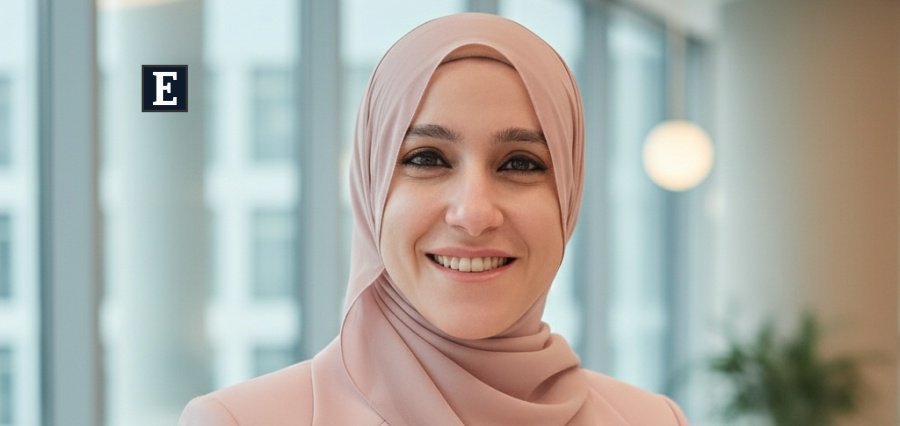
Education and research leadership is not only about expertise, it is about guiding people, shaping minds, and creating opportunities that help others grow. In technology-focused fields, this responsibility becomes even more important, as academic leaders play a key role in preparing students to think critically, work responsibly, and contribute to real-world progress. Strong leadership in academia requires both knowledge and the ability to inspire confidence, curiosity, and independent thinking among students and colleagues.
Dr. Sanaa Kaddoura, Associate Professor at Zayed University, College of Technological Innovation, represent this approach through her work in research and education. Her journey highlights a consistent focus on guiding students, supporting innovation, and contributing to the field of artificial intelligence with a strong sense of purpose. Her leadership is defined by impact, where knowledge is shared, developed, and used to create lasting value.
A Leadership Belief Rooted in Empowering Others
Leadership, for Dr. Sanaa, is deeply rooted in the belief that knowledge should never remain confined to individuals. “Knowledge gains value when it empowers others.” As a professor and researcher, she sees leadership as creating opportunities for students and colleagues to discover their abilities, build confidence, and contribute meaningful ideas. Her role is not only to guide but also to open doors.
This mindset defines her approach to academic leadership. It reflects a leader who sees education not as a one-way transfer of information, but as a process of enabling growth, confidence, and independent thinking.
Redefining Success Through Student Growth and Real-World Impact
Dr. Sanaa’s definition of success has evolved over time. At the beginning of her career, success was closely tied to personal milestones such as publishing papers, completing research projects, or receiving recognition.
Over time her definition evolved. Today she sees success in the growth of her students, the impact of collaborative research, and the real-world problems her work helps address. Seeing students transform into confident thinkers or researchers is now one of the most meaningful measures of success for her. This shift reflects a deeper understanding of leadership and impact.
The Invisible Leadership Challenges Women Still Face
Leadership comes with challenges that are often not openly discussed, especially for women. Dr. Sanaa highlights that one of the rarely discussed challenges in leadership, especially for women, is the constant balance between credibility and perception. She explains that women leaders often feel the need to repeatedly demonstrate competence while also meeting expectations of approachability and empathy.
Navigating these expectations quietly becomes an additional layer of work. Despite this, many women continue to lead with resilience and clarity, even when these challenges remain unspoken. Her insight reflects the reality that leadership is often shaped not only by responsibilities, but also by the pressure of how leadership is perceived.
Decision-Making Without Precedent in Academia and Research
In the world of academia, uncertainty is common, and leadership often requires decision-making without clear precedent. In research and academia, many decisions involve uncertainty. When there is no precedent, Dr. Sanaa returns to core principles: integrity, fairness, and long-term impact.
She gathers perspectives from trusted colleagues and considers how the decision will affect students, collaborators, and the broader community. Ultimately, she accepts that leadership sometimes requires making thoughtful decisions even when perfect certainty is impossible. Rather than reacting to uncertainty, she anchors decisions in values that protect both credibility and long-term outcomes.
Learning to Let Go and Trust Others
Like many leaders, Dr. Sanaa had to unlearn a mindset that once felt necessary. One mindset that took time to unlearn was believing that she had to carry every responsibility personally. Early in her career, she felt that strong leadership meant solving every problem herself.
With experience, she realized that leadership is about building strong teams and trusting people with meaningful responsibilities. Delegating does not reduce leadership; it strengthens it.
Remaining Authentic in Environments That Expect Conformity
Dr. Sanaa believes authenticity is rooted in purpose. Authenticity comes from having clarity about her values and the purpose of her work. Her focus has always been on advancing knowledge and contributing to meaningful societal challenges through AI research and education.
When she stays grounded in that purpose, it becomes easier to express ideas honestly and constructively, even in environments where conformity may be expected. Her voice remains consistent because it is guided by values, not by shifting expectations.
Failure as a Tool for Resilience and Strategic Growth
Failure has played an essential role in shaping Dr. Sanaa’s confidence and strategic thinking. Failure has been an essential part of her journey as a researcher. In research, experiments fail, papers get rejected, and ideas evolve through critique.
These experiences taught her resilience and helped refine her thinking. Each challenge forced her to improve her methodology, strengthen her arguments, and approach problems more strategically. For her, failure is not an ending, but a necessary process of improvement that strengthens both the quality of work and the mindset behind it.
Creating Space for Women to Rise in AI and Technology
Dr. Sanaa takes an intentional approach to supporting women in her field. She tries to mentor and encourage young women, especially students entering technology and artificial intelligence fields. Representation matters.
When women see other women succeeding in research and leadership roles, it expands what they believe is possible for themselves. She also tries to highlight their work, support their ideas, and create opportunities where their voices can be heard. Her approach reflects leadership that goes beyond personal progress, focusing instead on building pathways for others to advance.
Defining Transformative Impact Beyond Titles and Recognition
For Dr. Sanaa, transformative impact is not defined by position or recognition. For her, “transformative impact means creating knowledge or tools that continue to influence people beyond the immediate project.”
It could be through datasets that enable new research, technologies that address societal challenges, or students who carry forward the knowledge they gained. Impact becomes meaningful when it empowers others to build on what was started. This definition reflects a long-term view of influence, where the value of work is measured by what it enables others to accomplish.
A Legacy Built on People and Opportunity
When Dr. Sanaa looks toward the future, her vision of legacy is deeply human. She hopes her legacy will be defined by the people she helped shape along the way. If her students become thoughtful researchers, responsible technologists, and leaders who use technology for the good of society, that would be the most meaningful outcome.
Leadership, to her, is not about individual recognition but about creating a ripple effect of knowledge and opportunity.
Responsibility in Technology and the Ethics of Progress
One aspect Dr. Sanaa finds important in leadership conversations is the role of responsibility in shaping the technologies we build. As someone working in artificial intelligence and data science, she believes leadership today must go beyond innovation and efficiency. It must also consider ethics, societal impact, and the long term consequences of the systems we design.
For her, “leadership means ensuring that technological progress is aligned with human values.” It also means preparing the next generation of researchers and professionals to think critically about the tools they create. If we succeed in doing that, the impact of our work will extend far beyond individual projects or institutions.
Dr. Sanaa Kaddoura represents a leadership style built on knowledge-sharing, authenticity, and responsibility. Her journey reflects a deep commitment to empowering others through education and research, while also emphasizing ethics and long-term societal impact in the field of artificial intelligence.