
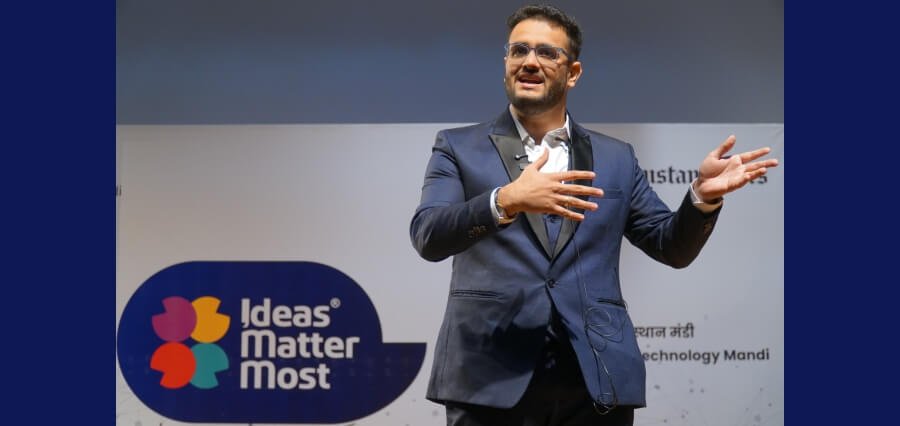
In a year when NIFTY 50 delivered muted and, in some phases, negative returns, financial market expert Amar Khanna emerged with a notable performance through a disciplined and data-driven investment strategy.
As the Founder of Angry Traders, is recognized as a TEDx speaker, author, and financial market analyst who also assists clients through research reports and financial planning services. During 2025, his market strategy reportedly generated an impressive 78% gain by identifying opportunities outside conventional equity investing.
Understanding the Shift in Market Cycles
According to the analysis outlined in the document, the period between 2020 and 2023 witnessed a strong rally in equities, particularly within NIFTY 50, while precious metals such as gold and silver remained comparatively flat. This prolonged equity growth led many investors to believe that equities would continue delivering steady annual returns.
However, market cycles do not move in straight lines. Periods of equity stagnation often create opportunities in alternative asset classes, particularly commodities and precious metals. That shift became increasingly evident in 2025.
The Gold-Silver Ratio as a Strategic Indicator
A key element of Amar’s strategy was his close observation of the gold-silver ratio, a widely followed metric in commodities investing.
The gold-silver ratio measures how many ounces of silver are required to purchase one ounce of gold. For instance, if gold is priced at ₹60,000 per 10 grams and silver at ₹600 per 10 grams, the ratio would stand at 100.
Historically, the ratio has averaged around 60. When the ratio rises significantly above this historical average, silver is generally viewed as undervalued relative to gold. Conversely, when the ratio falls below average, silver may be considered relatively expensive.
Identifying the Opportunity in Silver
In early 2025, the gold-silver ratio climbed to nearly 102, indicating that gold had become substantially more expensive compared to silver. Interpreting this as a market imbalance, Amar Khanna adopted a contrarian position by allocating capital into silver with the expectation that the ratio would eventually revert toward its historical average.
Over the following four months, silver experienced a sharp rally. As prices increased, the gold-silver ratio declined rapidly from 102 to nearly 57.
According to the document, this movement translated into gains approaching 100% on silver positions.
A Disciplined Exit Strategy
Rather than relying on prolonged holding periods or speculative sentiment, Amar Khanna followed a disciplined exit strategy. As the gold-silver ratio approached its long-term historical average near 60, he exited the positions and secured profits for both himself and his clients.
The strategy demonstrated the importance of timing, relative valuation, and disciplined decision-making in investment management.
Beyond Conventional Equity Investing
The case also highlights a broader investing principle: successful returns are often influenced not only by asset selection but also by understanding cyclical market relationships and identifying overlooked opportunities.
While many investors remain focused primarily on equities, market inefficiencies and value opportunities can emerge in alternative assets when traditional market relationships move to extremes.
Strengthening a Reputation Built on Research and Market Insight
In a year when many traditional investment strategies underperformed, Amar Khanna’s cyclical and research-oriented approach stood out for its ability to capitalize on changing market dynamics.
His performance further reinforced his reputation as a trusted market analyst, TEDx speaker, author, and advisor known for delivering research-backed insights and practical financial planning guidance.
Disclaimer –
This article is a work of original content created for public relations and informational purposes only. It may be published across multiple digital platforms with the full knowledge and consent of the author/publisher. All images, logos, and referenced names are the property of their respective owners and used here solely for illustrative or informational purposes. Unauthorized reproduction, distribution, or modification of this article without prior written permission from the original publisher is strictly prohibited. Any resemblance to other content is purely coincidental or used under fair use policy with proper attribution.