
Creating Smarter Learning Experiences
The field of education is entering a new era wherein learning involves much more than reading books, going to classrooms, and being taught through traditional methods. Students are becoming increasingly aware of the fact that they require skills which will help them cope with their changing jobs and work environments. As a result of this realization, Education Innovation has taken center stage in discussions pertaining to the future of education.
New learning strategies are being developed by schools, colleges, universities, and education institutions in order to offer learners an enhanced experience.
Technology Is Changing the Classroom
Nowadays, technology is becoming increasingly important in modern education. Digital classrooms, management systems, interactive technologies, and other online materials enable the students to gain knowledge outside school and classroom hours.
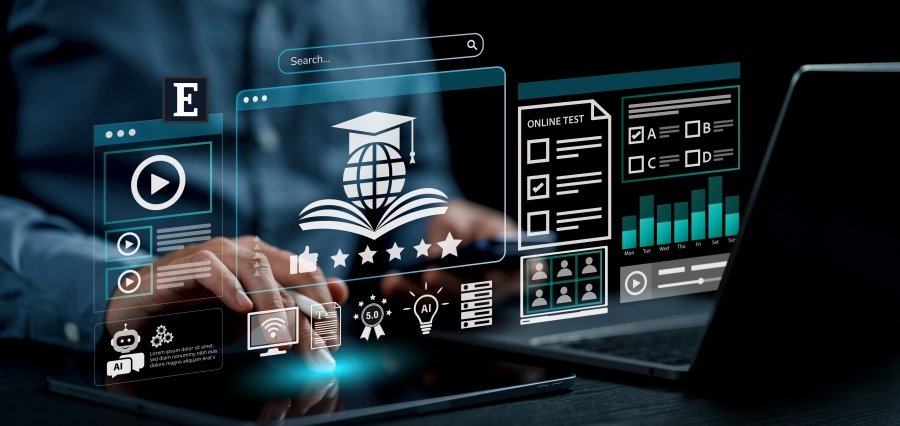
Education Innovation can assist teachers in incorporating technology along with effective pedagogical methods. For example, artificial intelligence can provide personalized learning, and digital assessments will help teachers see where the students stand in terms of progress. Virtual reality and augmented reality can help comprehend complicated subjects in interactive form.
With careful use, technology will provide teachers with additional tools while encouraging students to be more responsible for their education.
Personalized Learning for Every Student
Every student learns in his or her own way. For instance, some will grasp concepts easily through visual materials while others will learn better when they discuss or practice a certain concept. Most forms of education have a set structure but innovation in education is bringing about changes which make learning more flexible.
Using the Education Innovation, schools can design learning processes that suit individual strengths, interests and even learning speed. The adaptive tools will recommend content depending on the results achieved by the learner, whereas flexible programs will give the learner an opportunity to learn different fields depending on his or her objectives.
Teachers Remain at the Heart of Change
Technology can revolutionize education, but the educator is key to the process. Teachers’ wisdom, knowledge, and ability to relate to the learners cannot be matched by technology.
Successful Education Innovation thus centers on giving teachers an enabling environment without trying to strip them of their position. Training programs will assist the teachers to leverage technology and design better lessons and analyze data about learners for better results in the class.
Moreover, teachers are humanizers in education as they nurture curiosity and see the challenges of the learners and motivate them to develop a belief in themselves.
Learning Beyond Traditional Boundaries
It is not necessary for education to confine itself to being taught within the boundaries of a classroom. With the advent of distance learning, e-libraries, and online collaboration, education has become more accessible.
With this method of Education Innovation, individuals will be able to learn from teachers, mentors, and other people in various places. Students will be able to acquire new skills via online learning programs and projects while pursuing their academic studies.
This kind of method becomes all the more important for lifelong learning. As industries evolve and develop, people will be able to keep acquiring knowledge without interrupting their career.
Preparing Students for the Future
The future workplace will require not only theoretical knowledge but also effective communication, creative thinking, critical thinking, teamwork, adaptability, problem-solving skills and others. In this regard, educational institutions are providing such courses as project-based learning, entrepreneurship, programming, finance, etc.
In this regard, education innovation will help institutions in developing the problem-solving ability in students and making them realize how to use their theoretical knowledge.
The emphasis is gradually being shifted from memorizing facts to comprehending concepts and developing practical solutions.
Building an Inclusive Future of Learning
The next step in the development of education should be providing high-quality learning opportunities to more people. The use of digital materials can help involve children from remote locations, whereas affordable learning systems can remove some of the barriers for education.
Nevertheless, technology alone cannot provide solutions to all problems. It is important for institutions to take into account such factors as internet connectivity, teachers’ training, digital literacy, affordability, and student well-being.
Education Innovation in the future will require cooperation between educators, technology developers, policy-makers, families, and students. Only by working together, they can develop learning systems that will still be flexible, human-centric, and relevant.
A Future Built Around Better Learning
This new age of education does not mean that we must replace traditional modes of learning with technology; instead, it means enhancing the processes of learning, teaching, collaborating, and preparing for the future.
These institutions can only become successful through innovations, and in doing so, Education Innovation will definitely have its place in helping create learning systems that will be more personalized, relevant, and accessible. Certainly, education was always meant to prepare individuals for the future, and this preparation calls for innovations and better ways of doing things.