
Legal clients increasingly need advice that goes beyond interpreting legislation. Business decisions, family matters, investments and cross-border relationships can involve several legal questions at once, often across different jurisdictions and commercial expectations. For a law firm, meeting those needs requires sound local knowledge, clear communication and the ability to coordinate the right expertise without losing sight of the client’s immediate objectives.
Haussmann Loran Parichat & Partners brings these priorities together through a Thai legal practice with an international outlook. With seven offices across Thailand and more than fifty lawyers and legal professionals, the firm serves a client base composed of approximately 50% Thai clients and 50% international clients. Its work reflects a commitment to domestic legal needs while supporting business and personal interests across borders.
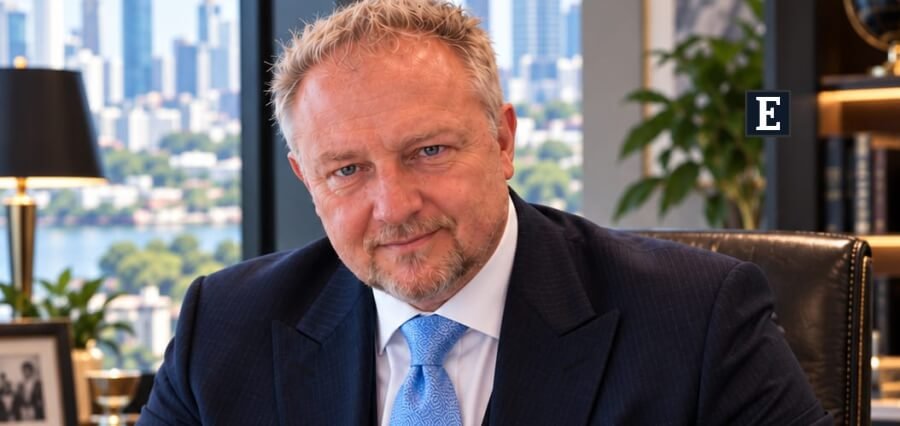
At the centre of this approach is Dr. Loran DP MIDOT, Managing Partner of Haussmann Loran Parichat & Partners, whose professional responsibilities also include serving as Vice President for Thailand of the Association of European Attorneys (AEA) and Vice President for Mining, Natural Resources and Regulatory Law within Justinian Lawyers. Through his leadership, the firm continues to develop its national foundations, strengthen collaboration across its offices, and connect clients with appropriate legal expertise when their matters extend beyond Thailand.
Let’s explore how Dr. Loran combines local legal knowledge with international cooperation to address clients’ needs and support their interests across borders!
A Vision Built on Thai Legal Expertise and International Understanding
The original vision behind Haussmann Loran Parichat & Partners was to bring together three elements that Dr. Loran considers inseparable: strong Thai legal expertise, a practical understanding of clients’ needs and the ability to work confidently in an international environment.
The intention was to build a firm where individuals, families, entrepreneurs and businesses could find not only legal representation, but also clear explanations, professional continuity and advisers who understood the wider context of their decisions. This foundation continues to shape the organisation as it expands its reach and develops its capabilities.
As he explains, “Haussmann Loran Parichat & Partners is a Thai law firm. Our roots, our offices and the foundation of our legal practice are in Thailand.” Its international perspective is an integral part of its identity rather than a separate activity added to its domestic practice.
The firm’s balanced client base illustrates how these two dimensions work together. Thai clients approach the firm for their everyday legal affairs, business operations, investments and disputes, including matters involving foreign counterparts. International clients seek assistance in understanding Thai law, protecting their interests and managing personal or commercial activities in Thailand.
As the organisation has expanded, its vision has become more ambitious, but its foundations have remained the same. The objective is not simply to open offices. It is to build a coherent legal group in which every office contributes to the strength of the whole. For Dr. Loran, “Sustainable growth means greater depth of expertise, stronger cooperation and better service, not size for its own sake.”
One Integrated Team, Shared Professional Standards
With seven offices and more than fifty lawyers and legal professionals, maintaining consistency across the organisation requires a deliberate approach to teamwork and accountability. For Dr. Loran, the foundation is the firm’s internal team model.
He ensures that all lawyers and legal professionals working across the seven offices are members of the group’s own internal team. The firm does not operate through freelance lawyers engaged on a case-by-case basis. This is a deliberate organisational choice. Its professionals are trained in the firm’s working methods, understand its internal procedures and share a common approach to client service.
They know one another and are accustomed to working together across offices and areas of practice. That familiarity matters because effective collaboration depends not only on professional qualifications, but also on knowing how colleagues work, where their strengths lie and when their involvement can add value to a matter.
Each case is assigned to a designated lawyer who retains primary responsibility for its management. That responsibility remains clear, but it does not mean the lawyer must work alone. When additional research, specialist knowledge or practical support is needed, the lawyer in charge can draw on colleagues throughout the group.
As Dr. Loran puts it, “Every client has a dedicated lawyer, but behind that lawyer stands the strength of an entire legal team.”
This approach combines individual accountability with collective expertise. Collaboration supports the responsible lawyer; it does not dilute responsibility or leave the client uncertain about who is managing the case. Confidentiality remains fundamental, and the involvement of additional colleagues must serve the needs of the matter while respecting the firm’s professional obligations.
As Managing Partner, he considers it his responsibility to ensure that this way of working remains central to the organisation as it develops. The shared model establishes common professional expectations across the offices while allowing the lawyer responsible for each case to exercise appropriate judgment.
Building Client Relationships Through Trust and Clarity
Legal expertise is essential, but clients also seek trust, accessibility and reassurance when dealing with complex matters. Dr. Loran believes that trust begins with listening carefully and giving honest advice.
Before recommending a course of action, the firm needs to understand what the client is trying to achieve, what concerns them and what practical constraints they face. A legal question rarely exists in isolation. It may affect a business relationship, a family, an investment or a person’s long-term security.
Clear communication is therefore essential. He believes clients should understand the available options, the principal risks, the likely implications of their decisions and the limits of what can reasonably be achieved. Reassurance should come from clarity and professional preparation, not from promises that no responsible adviser can guarantee.
This principle applies equally to Thai and international clients. He recognises that their circumstances may differ, but their expectations are often similar: competent advice, respectful treatment, responsiveness and confidence that someone is taking responsibility for their matter.
For business clients, understanding the commercial objective behind an instruction is equally important. A legally sound solution must be assessed alongside its cost, timing and effect on the client’s operations and relationships. The legal position matters, but so does the practical impact of the decision being considered.
Long-term relationships develop when clients feel that the firm understands their history and remains attentive beyond a single transaction or dispute. Its ambition is to become a trusted point of reference: a firm clients consult before making an important decision, not only after a difficulty has arisen.
This approach places the client’s wider circumstances alongside the immediate legal question. By explaining options, acknowledging limitations and remaining attentive to practical concerns, the firm seeks to build relationships grounded in professional responsibility and confidence.
Bridging Thai Law and International Business Expectations
For international clients entering or operating in Thailand, unfamiliar legal systems, regulations and business environments can make important decisions more difficult. Haussmann Loran Parichat & Partners approaches this challenge as a two-way responsibility, helping clients understand the applicable legal framework while recognising the practical expectations that shape their decisions.
Dr. Loran explains that expectations formed in another jurisdiction cannot simply be transferred to Thailand without careful consideration. Bridging the gap requires more than translating legal terminology. It involves explaining the reasoning behind a proposed structure, identifying practical implications and ensuring that clients understand both the opportunities and the constraints.
The same international understanding is relevant to the firm’s Thai clients. Many work with foreign company directors, investors, suppliers, customers and commercial partners. Their international needs do not necessarily begin with overseas expansion; they may arise in the ordinary course of doing business in Thailand.
He supports Thai companies negotiating with international counterparts by providing assistance with contractual terms, commercial expectations, responsibilities, dispute resolution or the coordination of advice across jurisdictions. For clients seeking to develop abroad, he can also help coordinate appropriate legal advice and facilitate relevant professional introductions. He aims to support international development with suitable preparation and connections rather than leave clients to approach an unfamiliar market without guidance.
The value of this balanced practice is that the two perspectives reinforce one another. Thai experience benefits international clients, while international relationships and commercial understanding strengthen the support available to Thai clients. The objective is the same in both directions: to make complex legal and business relationships more understandable, manageable and secure.
A Connected Approach to Legal Solutions
Dr. Loran describes the firm’s distinction as a combination of local presence, integrated teamwork and an international perspective. Its offices allow it to maintain close relationships with clients in different parts of Thailand, but they are not intended to function as isolated practices. They form part of one organisation, with shared methods and access to the wider group’s expertise.
That structure allows the firm to consider matters beyond a single legal discipline. A business investment, for example, may raise corporate, contractual, employment, immigration and property-related questions. Addressing only the most visible issue can leave important risks unresolved. The firm’s role is to identify how those issues connect and bring together the appropriate internal expertise.
The client should not have to piece together separate answers without understanding how they affect the overall objective. The firm’s experience with Thai and international clients also helps it recognise differences in expectations, communication and commercial priorities while keeping the applicable legal requirements at the centre of its advice.
He places considerable importance on professional independence. There are circumstances in which the right advice is to renegotiate, postpone or decline a proposed transaction. He believes that lasting client relationships depend on the willingness to communicate honestly, even when the advice is not what the client hoped to hear.
This approach reflects his understanding of the relationship between legal responsibility and client confidence. Advisers must be prepared to communicate risks and limitations rather than simply endorse a client’s preferred course of action. By combining local knowledge, coordinated expertise and professional independence, the firm seeks to address the wider context of each client’s needs.
International Cooperation with Practical Value
Dr. Loran’s vice-presidential responsibilities within the Association of European Attorneys and Justinian Lawyers extend his contribution to professional cooperation beyond Thailand. Although the two positions serve distinct purposes, he considers their practical value to clients more important than the titles themselves.
As Vice President for Thailand of the Association of European Attorneys (AEA), his role includes facilitating cooperation through a worldwide network of more than 9,000 lawyers and 1,600 law firms. This provides a platform for identifying suitable legal professionals in other jurisdictions and bringing together the expertise required for particular client needs.
The objective is to help develop tailored solutions, especially in commercial law, corporate matters, international business and cross-border transactions. For a Thai company, this may involve obtaining advice in an overseas market, preparing a commercial partnership, negotiating an international agreement or coordinating the legal aspects of expansion. For an international client, it may involve aligning a matter in Thailand with obligations, interests or proceedings elsewhere.
His second responsibility, as Vice President for Mining, Natural Resources and Regulatory Law within Justinian Lawyers, has a more specialised focus. It concerns cooperation and the exchange of expertise in sectors where investment decisions, commercial arrangements, regulatory requirements and environmental considerations must be examined together. His aim is to encourage useful professional dialogue and help connect the right expertise with the legal challenges encountered in these industries.
Both positions support the same broader principle: international relationships should lead to meaningful cooperation, not simply professional visibility.
He also makes an important distinction between the firm’s internal team and its external networks. The lawyers and legal professionals in Thailand belong to the group. When a matter requires advice on foreign law, the firm can coordinate with appropriately qualified independent lawyers or firms in the relevant jurisdiction. These relationships complement its internal capabilities; they are not presented as additional employees or offices of Haussmann Loran Parichat & Partners.
The strength of an international network, in his view, lies in the ability to bring the right professionals together around a clearly defined client need.
People at the Centre of Professional Excellence
The firm’s continued development depends on the lawyers and legal professionals responsible for its daily work. Dr. Loran regards them as the foundation of the organisation, recognising that a firm’s reputation is built through the quality of its everyday responsibilities.
The care taken with a document, the preparation of a case, the clarity of an explanation and the judgment exercised when a situation becomes difficult all contribute to the client’s experience. These responsibilities require individual expertise as well as a willingness to work constructively with others.
He wants professionals to understand that their expertise is valued, but that they are also part of a team whose strength depends on cooperation. A lawyer who seeks a colleague’s perspective on a difficult issue is demonstrating professional responsibility. Recognising when another person’s experience can improve the work is an important professional skill.
This is why he encourages the exchange of knowledge between offices and between experienced and younger colleagues. Training is not only about understanding the law. It also concerns judgment, communication, preparation and the ability to work constructively with others.
Recognition within the team matters as well. Good work should be acknowledged, and professionals should have opportunities to develop their capabilities and take on greater responsibility. His role is not simply to direct the organisation, but to help create the conditions in which its people can do their best work and contribute to something that lasts beyond any individual.
Recognition as a Responsibility
Professional recognition is encouraging, particularly when it brings attention to colleagues who have contributed consistently to the firm’s development. However, Dr. Loran believes that distinctions must be kept in perspective. An award, nomination or professional appointment is not a substitute for the quality of service delivered to a client, nor should it be treated as a guarantee of an outcome.
One of the most meaningful developments for him is seeing recognition extend beyond his personal professional relationships to the firm and its people. This reflects the kind of organisation he is trying to build: one with its own identity, shared professional culture and reputation.
Distinctions can introduce the firm to new audiences and create opportunities for cooperation. Their lasting value depends on what the organisation does with those opportunities and whether it continues to earn the confidence placed in it. Dr. Loran therefore sees recognition as a responsibility to maintain standards and continue improving rather than a reason for complacency.
Ultimately, the most important measure remains whether clients feel that the firm has advised them honestly, handled their matters diligently and treated their interests with the seriousness they deserve.
Addressing Challenges and Preparing for the Future
For Dr. Loran, one of the legal profession’s central challenges is turning legal complexity into advice that clients can actually use. Clients need to understand not only what the law requires, but also what those requirements mean for their decisions. A detailed legal analysis has limited practical value if the client cannot see the available options or the next steps.
He also believes that preventive advice deserves greater emphasis. Before entering a partnership, signing an agreement or committing to an investment, clients should have a clear understanding of the structure, their obligations and the principal risks. The firm’s responsibility is to help them build on sound foundations rather than focus only on correcting problems after they arise.
Technology presents another opportunity. Dr. Loran sees potential to improve research, organisation and administrative efficiency, but those tools must remain subject to professional judgment, verification and confidentiality. “Technology can assist the work. It cannot assume responsibility for the advice,” he notes.
For his firm, the opportunity lies in combining practical legal analysis, collaborative working methods and accessible communication. Whether a client is Thai or international, an individual or a business, the objective is to provide advice that is rigorous enough to address complexity and clear enough to support a decision.
Building an Institution for the Long Term
Dr. Loran’s ambition is to continue developing a respected Thai legal group with strong national foundations and useful international capabilities. The emphasis is on usefulness: international connections should help clients manage cross-border relationships, obtain appropriate advice and pursue opportunities with a clearer understanding of the legal environment.
At the same time, the firm must remain attentive to domestic matters that are equally important to its clients. A local business dispute, a family concern or an everyday contractual issue deserves the same care as a major international transaction.
Its priorities are to strengthen existing offices, deepen specialist expertise, develop its people and preserve the quality of collaboration across the group. He does not believe success should be measured simply by the number of offices or the size of a network. Growth is worthwhile when it improves what the firm can deliver and reinforces its ability to serve clients consistently.
He also wants to build an institution that can continue developing beyond its current leadership. That requires shared values, capable professionals and a culture in which responsibility and knowledge are passed on.
The balance between Thai and international clients remains central to this vision. The firm does not need to choose between being firmly rooted in Thailand and being internationally connected. Its task is to make those strengths work together for every client who places their trust in it.
A Final Word
Dr. Loran’s philosophy rests on the relationship between local expertise, international cooperation and professional responsibility. Through an integrated legal team, a balanced client base and professional networks that support cross-border work, Haussmann Loran Parichat & Partners continues to build on its Thai foundations while developing its international capabilities.
As the firm looks towards the future, its direction remains centred on making legal advice practical, accessible and responsive to each client’s circumstances. Its ambition is to develop an institution whose reputation rests not simply on its reach, but on the quality of its work and the confidence it earns.
As Dr. Loran concludes:
“Our identity is rooted in Thailand, but our perspective is international. We serve Thai and international clients with the same commitment, supported by one integrated legal team. Whether a matter is local or cross-border, our responsibility remains the same: to understand the client’s objectives, provide honest advice and bring together the expertise needed to move forward.”