
Leadership doesn’t lie in the title awarded by the organization or the responsibilities mentioned in a job description. The word leadership has far more weight than what this word sounds like. It carries intricacy; it is far more human. The quiet force is revealed when a decision needs to be made under pressure. It unfolds when the principles one refuses to compromise and in the lives one quietly transforms along the way. It lives in the courage to challenge conjectures, in the wisdom to know that the greatest impact often comes not from individual achievement but from creating conditions where others can rise. Some leaders need control consoles while others shape cultures. The rarest among them do both.
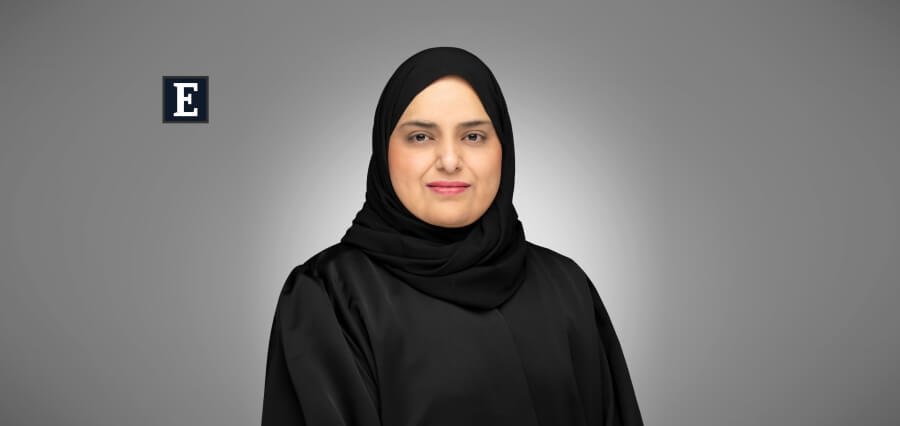
Meet Fatima Habib Al Sayegh, Head of IT Governance, Compliance, and Service Management, who is one such leader. She is a skilled professional navigating the crossway of governance, compliance, and digital transformation within the energy sector. She has spent her career building not just processes and systems, but trust between teams, across organizational layers, and within the individuals she mentors. Her journey is defined not by the absence of challenges, but by the principled manner in which she has met every one of them. In an industry where the stakes are high and the terrain is constantly shifting, she has remained anchored, not in rigidity but in clarity of values. And it is that clarity, above all else, that has made her a transformative force.
A Journey Built on Integrity
Every significant leadership journey has a defining thread. For Fatima, that thread is integrity not as a platitude, but as a lived and deeply examined principle refined across decades of professional life. She mentions that at the core of her leadership philosophy lies a belief that, “Integrity is not optional; it is foundational.” Early in her career, she understood it primarily as honesty. Over time, however, leadership expanded that definition. Today, she sees it as a more dynamic principle, one that involves transparency in communication, accountability in decision-making, and the courage to take ownership of outcomes regardless of whether they align with expectations.
In the energy sector, where operational scale, regulatory scrutiny, and technological transformation intersect, leaders frequently make decisions with far-reaching implications. According to her, these decisions are not always black and white, and it is precisely in those grey areas that integrity becomes most critical. She says, “Integrity acts as a compass, guiding choices that may not always yield immediate gains but ultimately contribute to long-term sustainability and organizational resilience.” She believes that trust is the currency of effective leadership, built through consistency and authenticity. When team members see that decisions are guided by principles rather than convenience, it creates a sense of stability that is difficult to manufacture any other way.
Redefining Success: From Achievement to Enablement
Like many high-achieving professionals, Fatima once measured success in the language most visible to the world: career milestones, recognition, and targets met. That changed as she stepped deeper into leadership. She states that “Success is no longer defined solely by what I achieve personally, but by the impact I have on others, the systems I help build, and the sustainability of the outcomes we create as a collective.” The shift moved her from being the driver of every outcome toward being the enabler of a high-performing ecosystem.
That transition required letting go of perfectionism. She came to understand that the desire to ensure everything is done flawlessly can lead to over-analysis, delayed decisions, and missed opportunities. According to her, this means focusing on progress over perfection, learning over certainty, and adaptability over rigidity. Success today, for Fatima, is holistic: results, relationships, culture, and impact woven together into value that extends far beyond immediate outcomes.
Navigating the Invisible: Challenges Women Leaders Still Face
Fatima speaks about the invisible challenges women in leadership face with a candor that comes from lived experience. She mentions one of the most persistent tensions: the balancing act between assertiveness and perception. Women leaders are expected to demonstrate confidence and authority, and yet when those qualities are expressed, they can be perceived differently than they would be in their male counterparts. Assertiveness may be misread as aggression; a collaborative approach may be mistaken for weakness. This creates, as she describes it, “An unspoken tension where women must continuously calibrate their communication and behavior to meet often conflicting expectations.”
She also speaks to the emotional labor many women carry, the often-unrecognized work of maintaining team cohesion and providing guidance beyond formal responsibilities. But she does not dwell in grievance. According to her, addressing invisible challenges starts with making them visible through open conversations, inclusive cultures, and the willingness to redefine leadership in a way that values diverse styles rather than demanding conformity to a single model.
Decision-Making Without a Map
In a career spent navigating complex governance environments and rapid digital transformation, Fatima has developed a principled approach to making decisions where no established precedent exists. She states that the first step is establishing clarity around the problem itself, defining scope, understanding context, and breaking down complexity into manageable components. Data plays an important role, but she recognizes that in unprecedented situations, “Waiting for perfect information can lead to delays that are more costly than the risks of moving forward.”
According to her, values serve as a critical guide when there is no clear path. Aligning decisions with core principles of integrity, accountability, and long-term value provides direction even in ambiguity. She also speaks to the role of diverse perspectives, engaging colleagues and subject matter experts because different viewpoints reveal risks and opportunities that any single vantage point will miss. Intuition, shaped by years of exposure to varied challenges, quietly informs decisions in ways that analysis alone cannot capture.
The Power of Unlearning
One of the most candid aspects of Fatima’s leadership story is her willingness to speak about what she has had to unlearn, chief among those things, the belief that effective leadership requires having all the answers. She mentions that early in her career, she equated competence with certainty, believing she needed to demonstrate expertise in every situation and provide clear, immediate solutions. Over time, she recognized that this approach fundamentally limits both personal growth and team potential.
She states that “Leadership is not about being the most knowledgeable person in the room, it is about creating an environment where knowledge, ideas, and perspectives can be shared openly.” Asking questions, she has found, can be more powerful than providing answers. This transformation has had its most visible impact on the teams around her. When individuals feel their contributions are valued and they have space to grow, the result is higher engagement, greater creativity, and deeper accountability, a shift, as she describes it, from control to influence.
Failure as a Foundation
Fatima speaks about failure with an appreciation that reflects genuine, unhurried reflection. She mentions that “Failure provides information that success often cannot,” and when outcomes diverge from expectations, the opportunity emerges to examine what went wrong and why, and it is in that process that some of the most valuable insights are found. True confidence, she has come to believe, is built through experience, including, and perhaps especially, through moments of difficulty.
She applies this philosophy organizationally as well, placing strong emphasis on structured reflection after setbacks, not to assign blame, but to extract learning. According to her, innovation cannot thrive where failure is heavily stigmatized. When individuals fear consequences for unsuccessful attempts, they stop experimenting and proposing new ideas. Treating failure as a learning opportunity builds the kind of resilient, adaptive teams that complex industries demand.
Creating Space for Other Women to Rise
If integrity is the spine of Fatima’s leadership philosophy, then creating pathways for other women to rise is its purpose. She describes mentorship as going beyond guidance; it involves listening, sharing lived experience, and helping individuals navigate both visible and invisible barriers. She is equally clear that mentorship alone is not sufficient. Sponsorship plays a critical role: while mentorship focuses on development, sponsorship is about advocacy, actively recommending individuals for opportunities, ensuring contributions are visible, and supporting inclusion in strategic discussions.
According to her, “Representation creates visibility, but it also creates aspiration.” When women see other women in leadership roles, it reinforces the belief that progression is possible. She actively encourages individuals to step forward even when they do not meet every listed requirement, recognizing that growth happens outside comfort zones. Creating space, she is careful to note, is not about preferential treatment; it is about equity, ensuring that talent is recognized and supported fairly, and that opportunities are accessible based on capability and potential, not visibility alone.
Legacy Defined by Depth, Not Recognition
When Fatima speaks about legacy, she does so with an unusual absence of ego. She states that “Transformative impact is not defined by visibility, scale, or recognition; it is defined by depth, sustainability, and the ability to create meaningful change that continues to influence systems, people, and processes long after the initial action has taken place.”
She envisions her legacy through three interconnected dimensions: integrity in leadership, empowerment of people, and sustainable organizational strength. She hopes to be remembered for consistent decisions, transparent communication, and accountability that does not shift with circumstances. She hopes to leave behind environments where individuals feel supported to step into roles they may not have considered for themselves and cultures that are more resilient, more adaptable, and more open than she found them. According to her, legacy is not something static or final. It evolves as leadership evolves, shaped by every interaction and every decision made with intention.
If those who have worked alongside her go on to become leaders who uplift others in turn, she reflects, then the impact multiplies far beyond her direct influence. That ripple effect, quiet, sustained, and deeply human, is, to her, one of the most powerful forms of legacy. For Fatima Habib Al Sayegh, leadership has never been about the leader. It has always been about what and who the leader leaves stronger.