
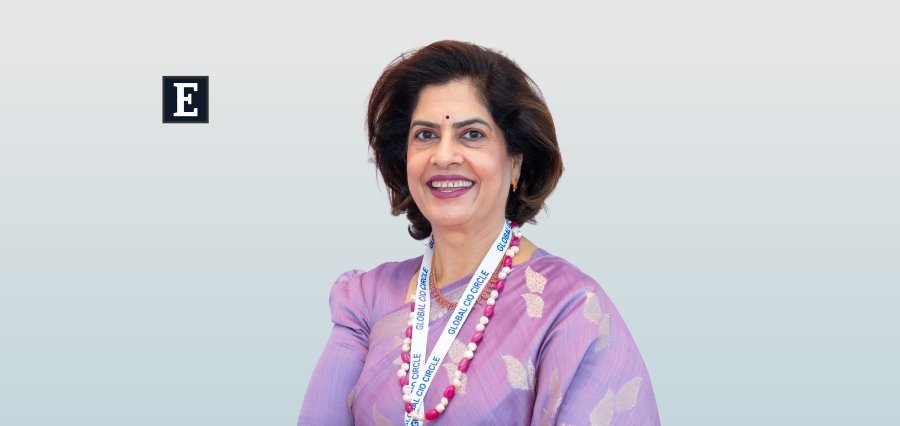
Across continents Sunitha Kshatriya has transformed an enduring conviction into a body of work: human potential does not flourish by chance; it rises when the right ecosystem is intentionally built around it.
An Architect of Opportunity
People can cross borders in a matter of hours, but their professional standing, credentials and networks do not always travel with them. Dr. Sunitha Kshatriya first encountered that dislocation not as an abstract policy problem, but through the lives of highly qualified immigrant women in Canada whose education and experience were routinely undervalued. Rather than accept the gap between ability and opportunity, she began designing ways to bridge it.
That instinct – to recognize stranded potential and build a system capable of activating it – has shaped her career for nearly two decades. It took her from workforce empowerment in Toronto to academic leadership in Dubai, from design-thinking classrooms to startup incubation, from research and publishing to cross-border entrepreneurship programs, and ultimately to the creation of Aspire, TMT ranspire, Inspire Global LLC, knownas ATI Global.
Today, Sunitha works as an ecosystem architect connecting entrepreneurs, universities, investors, governments, mentors and industry partners. Her focus is not simply on launching programs or ventures. It is on building the relationships, confidence, capabilities and institutional pathways that allow others – particularly women, youth and emerging founders to rise.
The First Ecosystem: Rebuilding Professional Identity in Canada
After relocating to Canada, Sunitha observed that many internationally educated women between the ages of 35 and 50 possessed advanced qualifications and substantial experience but struggled to re-enter their professions. Language barriers, unfamiliar recruitment systems and the demand for Canadian experience often prevented employers from recognizing expertise that had already been proven elsewhere.
She responded to a request for proposals from Skills for Change by designing Project Empowerment, a program linking adult learning, transferable skills, job analysis and employability. The initiative received support through Status of Women Canada and became her unexpected entry into social entrepreneurship and community leadership.
The program’s significance was measured less by recognition than by the women who regained direction, confidence and employment pathways. Sunitha later brought the issue to a wider audience through her presentation, Rethink Transferable Skills: Tap the Talents of Foreign Skilled Professionals, at Toronto’s Ted Rogers School of Management. The experience also informed her early academic books on empowerment, self-actualization and selection systems, and led her to establish the Empowerment Centre for the Advancement of Education, a Toronto-based not-for-profit serving women and youth.
A Return to Dubai – and a New Kind of Classroom
When Sunitha returned to Dubai in 2015, she recognized another form of underused potential. Many young people were selecting courses and careers without a deep understanding of their interests, strengths or the human problems they wished to solve. Her response was to move more fully into higher education, research, institutional effectiveness and innovation pedagogy.
Her professional development included the UAE Innovation and Entrepreneurship programme at Stanford University in 2018, followed by Teaching-Learning Studio program at Stanford’s d. school in 2020, 2023 and 2024. These experiences deepened her application of design thinking: empathize before defining, understanding before inventing, and test ideas through learning rather than waiting for perfection.
Design thinking gave formal structure to a belief she had already developed through experience: “The greatest breakthroughs rarely begin with technology; they begin with understanding people,” she says. Technology can amplify a solution, but empathy reveals what is worth solving.
Building an Entrepreneurship Centre from the Ground Up
At the American University in Dubai, Sunitha moved from teaching innovation and entrepreneurship to building the institutional infrastructure that could support it. Beginning in 2019, she established and expanded the university’s Entrepreneurship and Innovation Center, later serving as its Director and Associate Professor of Management.
Under her leadership, the centre evolved into a certified incubator with a structured pathway spanning mindset development, ideation, incubation, acceleration and partner programs. According to her professional record, the center delivered more than 250 workshops, supported over 500 startup ideas with access to more than 150 mentors, facilitated 73 trade licences, and coordinated 583 ecosystem engagements, including 82 signed partner agreements.
The work extended beyond classroom entrepreneurship.
Sunitha cultivated relationships with government entities, investors, professional-services firms, accelerators and technology partners. Collaborations included Grant Thornton, Dubai SME, the Mohammed Bin Rashid Innovation Fund, Dubai Future Foundation, Lumi Network, Game Sphere and others. She also led development of Block-Lab, a blockchain-focused initiative that secured funding approvals involving Hedera and additional partners.
These numbers matter because they represent institutional capacity that did not previously exist. Yet Sunitha’s preferred measure of success remains human: founders who became more confident, students who developed agency, mentors who opened doors and partnerships that created opportunities no individual could have built alone.
From Institution Builder to Global Founder
In December 2025, after six years of institution-building and academic leadership at the American University in Dubai, Sunitha began her next entrepreneurial chapter. In early 2026 she founded Aspire, Transpire, Inspire Global LLC (ATI Global) in the United Arab Emirates.
ATI Global represents the natural evolution of her previous work. It is designed to connect ambition with execution by linking talent, market opportunity, capital and institutional support across global corridors. Its work sits at the intersection of entrepreneurship, innovation, experiential learning, venture development, investment readiness, cross-border market access and the empowerment of women and youth.
The venture is developing strategic platforms, partnerships and flagship initiatives across the UAE, Saudi Arabia, India, the United States and wider international networks. Rather than operating as a conventional consultancy, ATI Global is being built as a collaborative ecosystem – one that brings education, entrepreneurship, innovation and investment into shared architecture.
Entrepreneurship Education at Regional Scale
Sunitha’s regional work also includes curriculum development and training consulting for PwC Academy Middle East. She was engaged to design a flagship entrepreneurship track for a major banking-sector initiative in Saudi Arabia, developing high-level design documents, course content, experiential activities, assessments and feedback systems. “Buildings, programs, and awards eventually fade; the lives we influence become our true legacy,” Sunitha reflects.
The programme positions entrepreneurship as a workforce capability rather than a standalone subject. It integrates entrepreneurial mindset, design thinking, business strategy and venture development with practical tools across finance, marketing, human resources, business development and consulting. This reflects Sunitha’s broader view that entrepreneurship education is most effective when learners are given not only concepts, but repeatable methods for acting on opportunity.
Leadership Through Enabling, Not Directing
Sunitha rejects the idea that leadership means possessing all the answers. For her, leadership is about creating environments where other people can succeed. That requires connecting people, building trust, removing barriers and designing systems in which collaboration becomes easier and more meaningful.
Her approach combines servant leadership with design thinking. Before designing a strategy, program or product, a leader must understand the people it is intended to serve. Before directing others, a leader must create the conditions in which they can exercise their own judgement and grow.
This philosophy has been tested across grassroots empowerment, academic quality assurance, research leadership, curriculum development, startup incubation and entrepreneurship consulting. Across each context, one principle has remained constant: organizations grow sustainably only when the people within and around them are enabled to grow, partnership since: relationships matter more than titles, because throughout her career it has been partnerships, not individual effort, that created opportunities no single person could have achieved alone.
Values That Do Not Bend to Convenience
Sunitha places little value on purely transactional relationships. She prefers long-term partnerships built on trust, purpose and shared impact. This orientation has shaped both her institutional alliances and her personal leadership style: investing in relationships before they are needed, remaining useful to others, and protecting integrity.
Creative courage is another central value. Her career has required repeated reinvention across countries, cultures and sectors. She has moved from industry into academia, from academic administration into entrepreneurship, and from established institutional roles into the uncertainty of building a global venture. Those transitions taught her that resilience is more important than perfection and that failure is most valuable when treated as feedback.
Beneath these professional values is an ethical and contemplative foundation. Meditation, reading, reflection, family and disciplined routines help her remain present while managing responsibilities across time zones. She views balance not as an equal division of hours, but as alignment with values and full attention to the work or relationship in front of her.
Scholar, Author and Transdisciplinary Thinker
Sunitha’s work extends beyond organizational leadership. She is a researcher and author whose publications span happiness, empowerment, job analysis, recruitment, quality assurance, entrepreneurship and the relationship between human development and institutional systems. “I do not believe in purely transactional relationships; I value long-term partnerships built on trust, purpose, and shared impact,” she says.
Her research profile includes journal publications, international conference presentations and ongoing studies on entrepreneurial intention among university students in the UAE, as well as the role of artificial intelligence and emotional intelligence in advancing women’s wellbeing and leadership. Her scholarly identity can be explored through her ORCID, Google Scholar, ResearchGate and LinkedIn profiles.
Alongside her academic work, she has published a body of reflective and spiritual writing, including A Door Within – In Search of Stillness: A Sufi’s Awakening, Divine Within: A Soul’s Journey to Eternity, Silence Within: The Sound of Eternity, Light Within: The Final Push and Universe Within: The Beginning and The End. Together, these works explore awakening, silence, human unity and the inner dimensions of transformation.
Future-Ready, but Human-Centered
Sunitha sees innovation ecosystems becoming more collaborative, more international and increasingly shaped by artificial intelligence, blockchain and emerging technologies. Yet she is equally clear that technology cannot replace imagination, ethical judgement or purpose.
Her outlook on where the advantage will ultimately lie is direct. “The future belongs to organizations that learn faster than the pace of change,” she says. That requires continuous learning, research, global collaboration and close engagement with the founders, investors and communities closest to emerging needs. It also requires institutions to become more permeable – universities working more closely with industry, governments enabling experimentation, and startups thinking globally from their earliest stages.
ATI Global’s response is to invest in human capability while building bridges to technology, capital and markets. The goal is not innovation for its own sake, but innovation that expands agency, solves meaningful problems and creates opportunity.
A Legacy Measured in People
Sunitha Kshatriya can point to institutions built, programs designed, books published, research presented, partnerships created and awards received. But the recognition that matters most to her has come from former students and entrepreneurs who credit her mentorship with changing the direction of their lives.
Buildings, programmes and awards eventually fade; the lives we influence become our true legacy. That conviction explains why she measures impact less by the positions she has held than by the ecosystems she has helped build and the people she has helped grow.
Over the next decade, she wants ATI Global to become a respected international platform linking education, entrepreneurship, innovation and investment across the GCC, Europe, North America and Asia. More importantly, she hopes to leave behind leaders who think boldly, act ethically and create opportunities for others long after her own direct involvement has ended.
“Leadership is about creating environments where other people can succeed.”