
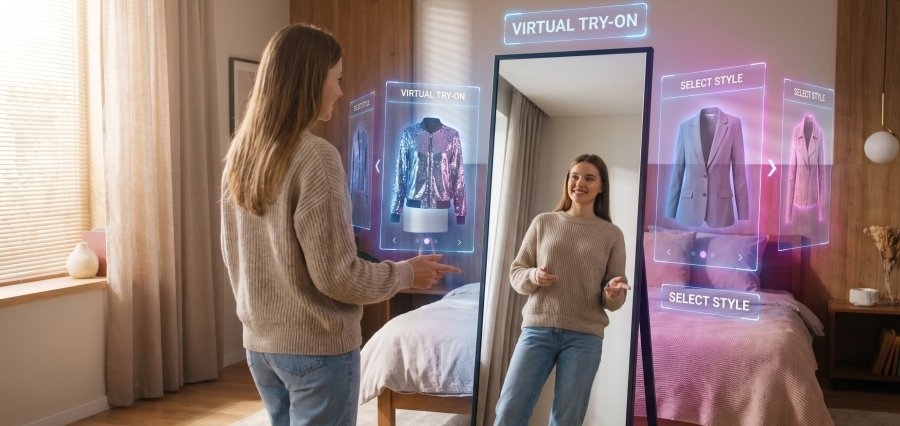
Online shopping has changed fast over the past decade, and one of the clearest signs of that change is the rise of Virtual Try-On Technology. What used to feel like a futuristic idea confined to a handful of apps is now something mainstream shoppers expect before they check out. Fashion retailers, eyewear brands, and beauty companies have all begun investing heavily in tools that let customers see products on themselves without stepping into a physical store. The shift did not happen overnight, it built gradually as smartphone cameras improved and consumers grew more comfortable interacting with apps that use their own image.
This growing demand raises a natural question, what are the benefits of Virtual Try-On for businesses trying to compete in a crowded digital marketplace. The short answer is that it reduces uncertainty, and uncertainty is often the biggest reason a shopper abandons a cart before completing a purchase. When customers can preview how something will actually look, they move through the buying process with far less hesitation.
Why Retailers Are Investing in This Shift
Return rates have been climbing for retailers for years, particularly in apparel and footwear, where a single photo rarely tells the whole story on fit and appearance. Apparel and footwear retailers in particular have dealt with rising returns for years, largely because a photo alone cannot capture how something will actually fit or look. Virtual Try-On Technology changes that by giving shoppers a way to see the item on their own body or face before it goes into the cart.
Instead of guessing based on a model who looks nothing like them, customers get a version of the product that reflects their own proportions or features, and that shift alone has changed how confident people feel about buying online. Some retailers report that return rates in categories using this feature have dropped noticeably compared to product lines still relying only on static photos and size charts.
What Are the Benefits of Virtual Try-On
For shoppers, the advantages are straightforward. They spend less time second guessing a purchase, and they gain confidence that what arrives will match what they expected. For retailers, the benefits extend well beyond the individual transaction. Lower return rates translate directly into cost savings, since processing a return often costs more than the profit margin on the original sale once shipping, restocking, and labor are factored in.
Businesses that ask what are the benefits of Virtual Try-On usually find the same pattern across their own sales data, fewer returns, higher conversion rates, and stronger customer loyalty over time. Marketing teams have also noticed that shoppers who use these preview tools tend to spend more time on a product page, which often correlates with a higher likelihood of purchase.
Across Different Industries
This capability is no longer confined to a novelty feature tucked into a mobile app. It has become part of the core shopping journey for brands that sell visually driven products. Eyewear companies use it to let customers test dozens of frames from home before narrowing down a final choice.
Cosmetics brands use it to preview shades of lipstick or foundation without a single sample touching skin, which has become especially valuable as hygiene concerns around shared testers have grown. Furniture retailers have adapted the same underlying concept to show how a couch or table might look inside an actual living room, using a phone camera to overlay the product onto a real space.
The Technology Behind Virtual Try-On Experiences
This shift is powered by advances in computer vision, augmented reality and machine learning working in tandem. Cameras pick up a shopper’s image or body shape, then software fits the product onto it in real time, adjusting for angle, lighting, and movement.
Faster processing and more accurate rendering have put Virtual Try-On Technology within reach of smaller retailers that do not have a dedicated technology team. Many now rely on third party platforms that plug directly into existing ecommerce sites rather than building the capability from scratch, which has lowered the barrier to entry considerably over the past few years.
Balancing Cost and Value
Despite the momentum, adoption still runs into friction. Cost is the barrier smaller businesses mention most, building or licensing Virtual Try-On Technology takes an upfront investment that not every company can absorb right away. Accuracy is another concern, since a poorly rendered preview can damage trust faster than having no preview at all, particularly when a product appears distorted or the fit looks noticeably different once the item arrives.
Companies considering this shift should weigh what are the benefits of Virtual Try-On against the operational cost of implementation before committing budget to the feature, since a rushed rollout can do more harm to customer confidence than skipping the technology altogether.
Looking Ahead
Analysts expect demand for this category to keep expanding as more shoppers grow comfortable with digital previews before buying. Virtual Try-On Technology is increasingly viewed less as an add on feature and more as a baseline expectation, similar to free shipping or easy returns a decade ago. Brands that delay adoption may find themselves at a disadvantage compared with competitors who have already made the experience feel seamless, especially as younger shoppers who grew up with these tools begin to expect them by default.
Virtual Try-On Technology’s rise reflects something bigger happening in online shopping, confidence before the purchase now matters as much as convenience does after it. Businesses that keep asking what are the benefits of Virtual Try-On for their specific customers usually find answers that make the investment worthwhile, fewer returns, stronger loyalty, and a buying experience that feels less like a guess and more like stepping into a fitting room.