
Prime Highlights :
- Crown Estate submits £2bn plans for a new science and innovation district at Cambridge Business Park.
- Project targets 8,000 jobs and up to 500 homes, 40% affordable.
Key Facts :
- Redevelopment includes 1.8 million sq ft of office and R&D space.
- Scheme could add £650m yearly to the UK economy.
Background :
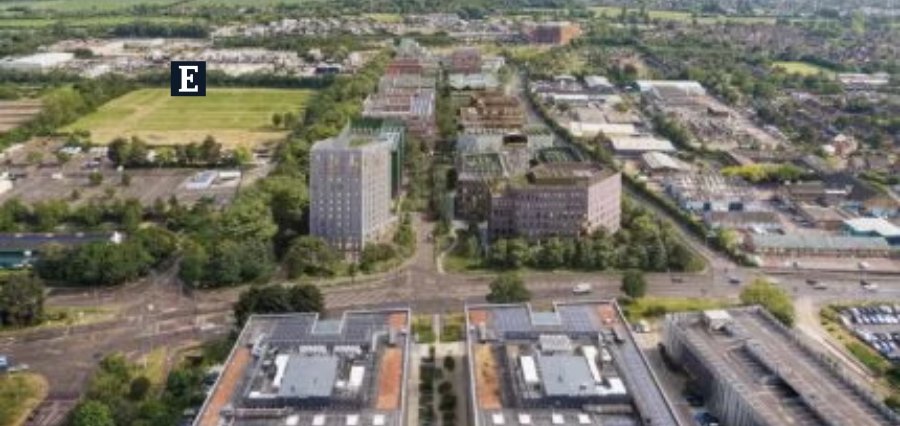
The UK’s Crown Estate has submitted plans for a £2bn ($2.6bn) redevelopment of Cambridge Business Park, outlining a new science and innovation district for north-east Cambridge.
The submission went to the Joint Development and Management Committee of South Cambridgeshire District Council and Cambridge City Council.
The proposal covers up to 1.8 million square feet of office and R&D space alongside a new neighbourhood of up to 500 homes, 40% of which would count as affordable housing, with 200 set aside as co-living units.
Plans also include nearly 60,000 square feet of leisure and retail space for shops, restaurants, cafes and bars, plus green public areas and a new main square.
The Crown Estate expects the project to support more than 8,000 jobs, mainly across science and innovation sectors, while lifting annual local spending by around £25m. The scheme adds walking and cycling routes, a guided bus stop, and stronger links to Cambridge North Station, Oxford and London.
Environmental targets include a low-carbon design and a 55% cut in water use, saving an estimated six million litres yearly. The application follows two years of public consultations, school workshops and input from an Ideas Exchange panel.
The Crown Estate is also putting £1.5m into Greater Cambridge Impact, a £10m fund tackling youth skills, care leavers and homelessness.
Managing director Kristy Lansdown said Cambridge Business Park sits at the heart of one of the world’s leading innovation hubs, and the masterplan supports the city’s growth while delivering environmental and community benefits.
The project forms part of the Crown Estate’s plan to invest up to £1.5bn in UK science and technology, with the Cambridge scheme alone projected to add roughly £650m yearly to the economy.